Everything you need to know before you buy your first wig — or your next one. We've been fitting wigs since 1996, and these are the questions we hear every day.
There are four main types of wig hair, each with its own strengths.
Synthetic Hair
Synthetic wigs are made from man-made fibers engineered to look and feel like real hair. They hold their style right out of the box — no blow-drying or styling needed — and spring back to the same look after every wash. They're also the most affordable option.
Ready to wear right out of the box
Holds its style in humidity
Easy to care for — rinse, shake, air dry
Budget-friendly — most styles $80–$350
Cannot be exposed to high heat (curling irons, ovens, hot cars). However, heat up to the boiling temperature, 212 degrees Fahrenheit is okay. Steam can be used to tame any synthetic wig.
Best for: Everyday wear, first-time buyers, low-maintenance lifestyle.
Heat-Friendly Synthetic
A newer generation of synthetic fiber that tolerates low to medium heat — typically up to 350°F. You can use a flat iron or curling iron to change the style, giving you more flexibility than standard synthetic.
Style with heat tools (up to 350°F — always check the tag)
Slightly higher price than standard synthetic
More styling options without the cost of human hair
Colors vary a bit from non-heat friendly wigs with the same color numbers. Heat friendly wig colors are generally bolder, and more so on reds and blondes than dark browns.
Best for: Shoppers who want to customize their look occasionally.
Human Hair
Human hair wigs are made from real hair and behave exactly like your own — you can wash, blow-dry, and style them. They look and feel incredibly natural and last much longer with proper care. But they need that care or they may not look like they do on the models you will see wearing them online.
Style with any heat tool, just like your own hair
Can be colored (but consult a stylist experienced with wigs). Adding natural lowlites is much safer than adding highlights. No peroxide should be used. You can ruin a human hair wig by coloring yourself.
Lasts 1–3 years or longer with good care
Higher price — most styles $500–$2,000+
Best for: Daily wear, active lifestyle, maximum natural appearance.
Human Hair Blends
Envy Wigs and other wig makers offer select styles in blends of human hair and high-grade synthetic hair, usually Kanekalon. These are known to outlast even 100% human hair. They give you the ability to style at high heat and are less expensive than 100% human hair wigs.
Style with high heat, just like human hair
Outlasts both standard synthetic and often 100% human hair
Lower cost than 100% human hair
Best for: Shoppers who want human hair styling freedom at a more accessible price.
WigSalon Tip If you're buying your very first wig, we almost always recommend starting with synthetic. You'll learn what length, style, and color work for you — without the higher investment.
2. Cap Construction
Cap Type
What It Is
Best For
Basic Cap
Machine-wefted rows of hair sewn onto a stretchy cap. Most common and affordable.
Everyday wear, first-time buyers
Lace Front
Sheer lace panel at the forehead. Creates a natural-looking hairline.
Anyone who wears hair off their face
Monofilament Top
Individual hairs hand-tied to a skin-like membrane. Each hair moves freely, appears to grow from scalp.
Hair loss, sensitive scalps, natural-looking part
Hand-Tied
Every hair individually knotted by hand. Most natural movement — extra comfortable fit stretches to the contour of your head shape — highest price.
Medical hair loss, luxury buyers, sensitive scalps
Open Wefting
Open tracks allow air to circulate. Lightweight and cooler.
Warm climates, active lifestyles
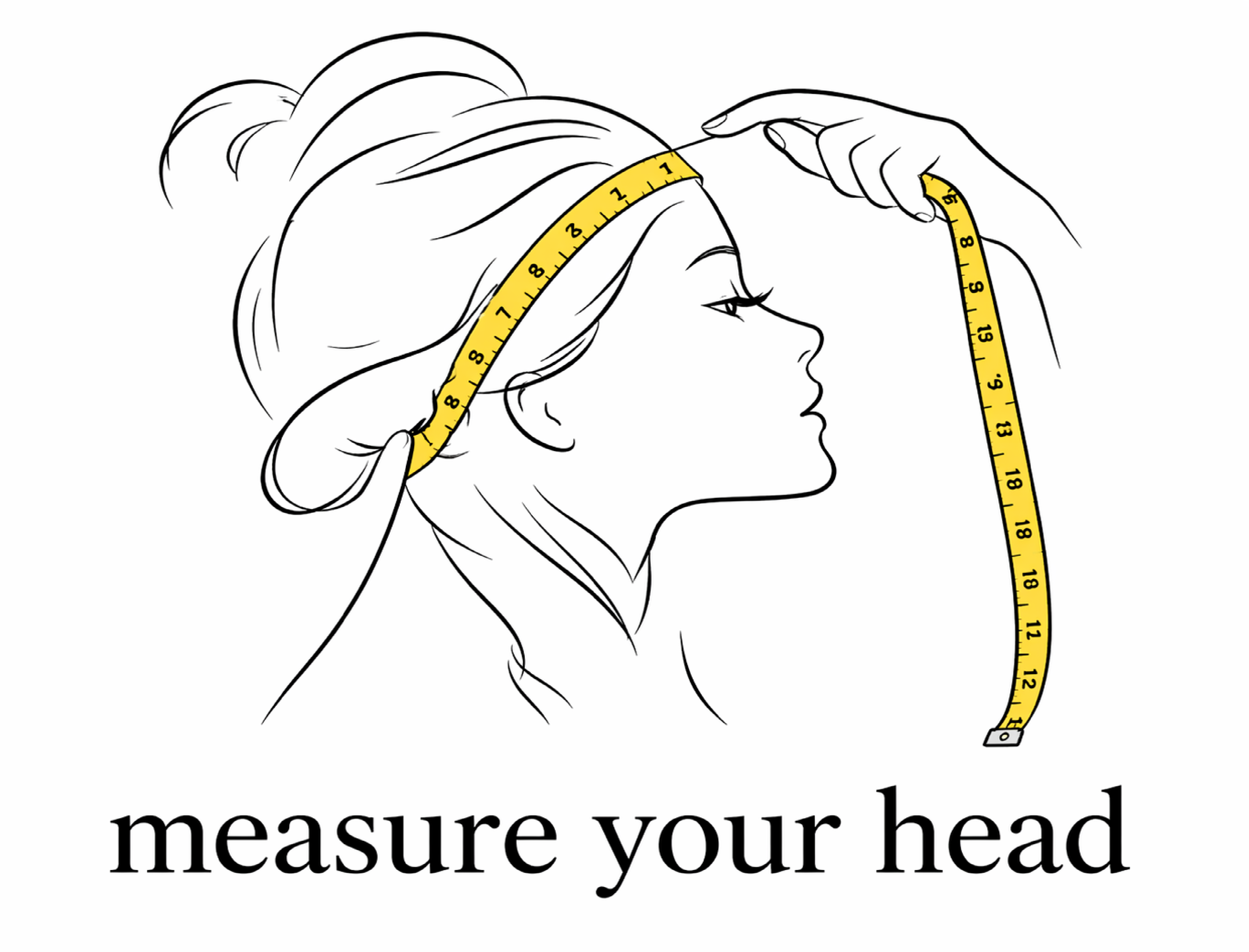
3. How to Measure Your Head
Getting your head measurement right takes about 2 minutes and makes a real difference in fit.
What you need: A flexible measuring tape (the kind used for sewing). No tape? Use a piece of string and measure it against a ruler.
Circumference — Start at your natural hairline at the center of your forehead, go around the back of your head (at the nape), and return to where you started. This is your head circumference. For most people, this is the only measurement you need.
WigSalon Tip If you're between sizes, the stretchy cap adjusters on most wigs give you about a half-inch of flexibility in either direction.
For some clients these other measurements may be needed, especially for human hair wigs and custom made wigs.
Front to Nape — Measure from the center of your hairline over the top of your head down to the nape of your neck.
Ear to Ear (over top) — Measure from the top of one ear over the crown to the top of the other ear.
Ear to Ear (across forehead) — Measure across your forehead from hairline above one ear to the other.
Temple to Temple (around back) — Measure from one temple around the back of the head to the other temple.
Nape of Neck — Measure across the nape, from the point where your hair begins on one side to the other.
4. Cap Sizes
Size
Circumference
Notes
Petite / Petite-Average
Under 21.5"
Great for smaller frames, teens, or anyone who finds standard wigs sit too low
Average
21.5" – 22.5"
Fits the majority of women — most wigs ship in this size
Large / Average-Large
22.5" – 23.5"
More room in the crown; reduces that “too tight” feeling
Almost every wig has adjustable Velcro tabs inside the cap that let you fine-tune the fit by about a half inch.
5. Face Shape Guide
The key to finding the right style is highlighting the features you love and softening the ones you'd like to distract from. With a hairstyle, you have the power to create an illusion that leads the eye to where you want it to go.
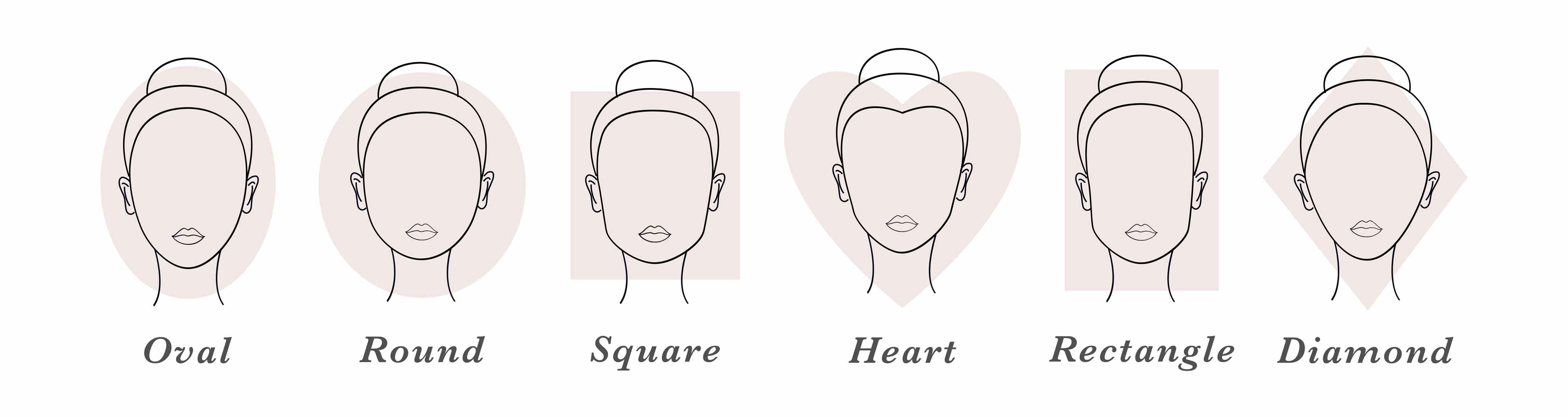
Identifying Your Face Shape
Oval: Balanced proportions, slightly narrower jawline than forehead. Easiest to shop for.
Round: Full cheeks, rounded chin, width and length roughly equal.
Square: Strong jawline with broad forehead and cheekbones.
Diamond: Narrow forehead and jawline, broad cheekbones.
Wig Styles for Each Face Shape
1. Oval
Oval faces can pull off almost any wig style due to their balanced proportions.
Chin-Length Bob with Volume — highlights jawline while adding fullness
Long Layers — volume and movement without overwhelming your face
Waves and Curls — soft, romantic look
Avoid: Wigs with too much volume on top, which can make the face appear longer.
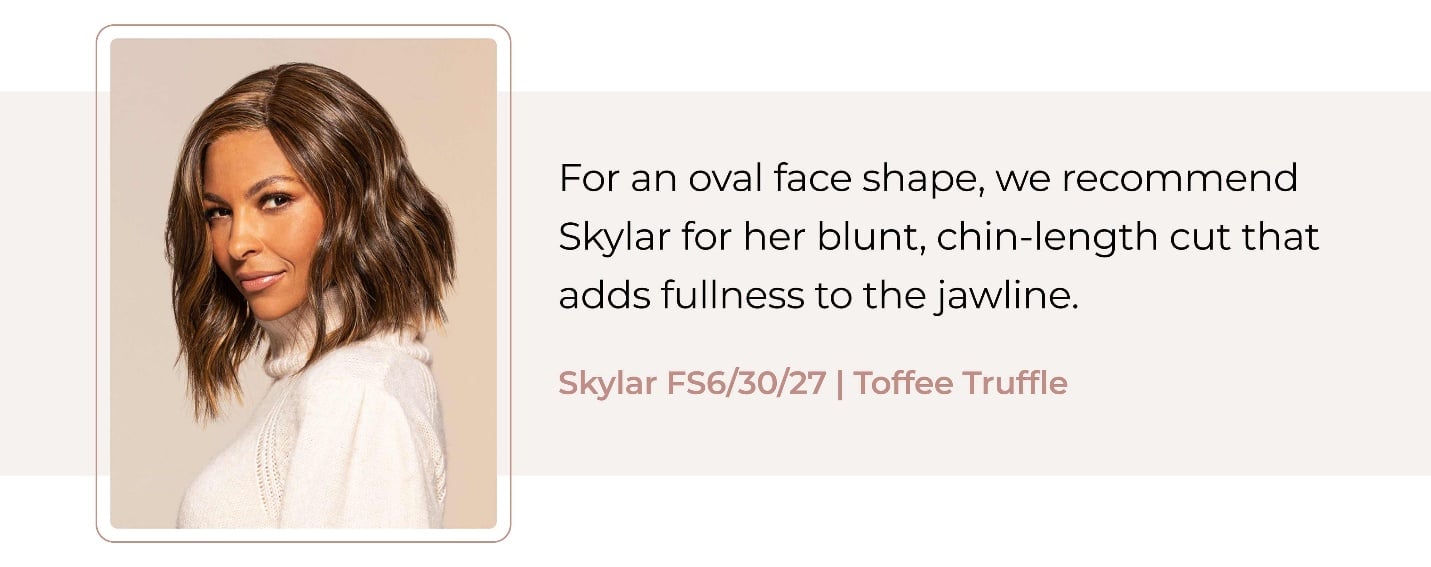
For an oval face shape, we recommend Skylar for her blunt, chin-length cut that adds fullness to the jawline.
Skylar FS6/30/27 | Toffee Truffle
2. Round
The goal for round faces is to add length and create the illusion of a more defined structure.
Long and Layered — elongates the face
Side Parts — asymmetry breaks up the roundness
Volume on Top — height at crown adds length and balance
Avoid: Chin-length bobs and too much volume on the sides.
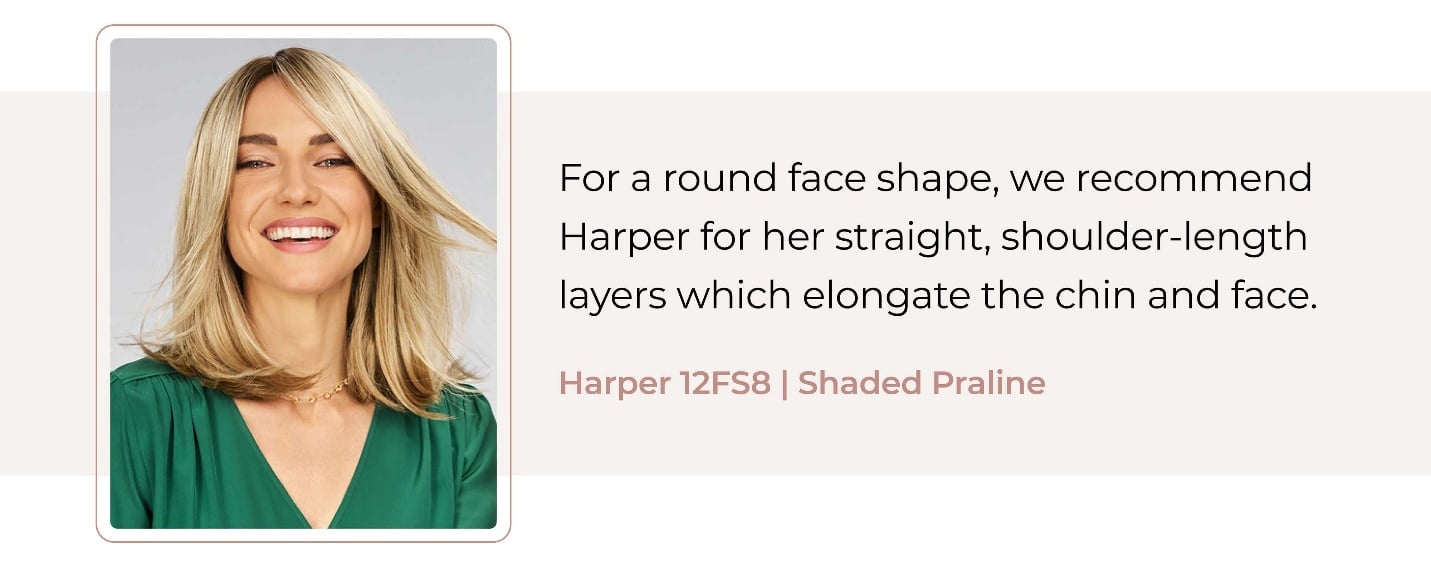
For a round face shape, we recommend Harper for her straight, shoulder-length layers which elongate the chin and face.
Harper 12FS8 | Shaded Praline
3. Square
Soften your strong jawline and add length to your face.
Soft Curls and Waves — add softness and roundness to angular features
Layered Cuts — wispy ends help soften the jawline
Side-Swept Bangs — break up forehead width and add softness
Avoid: Blunt cuts that hit at the jawline, layers that fall right at your jawline, and straight-across bangs that can make the face appear shorter.
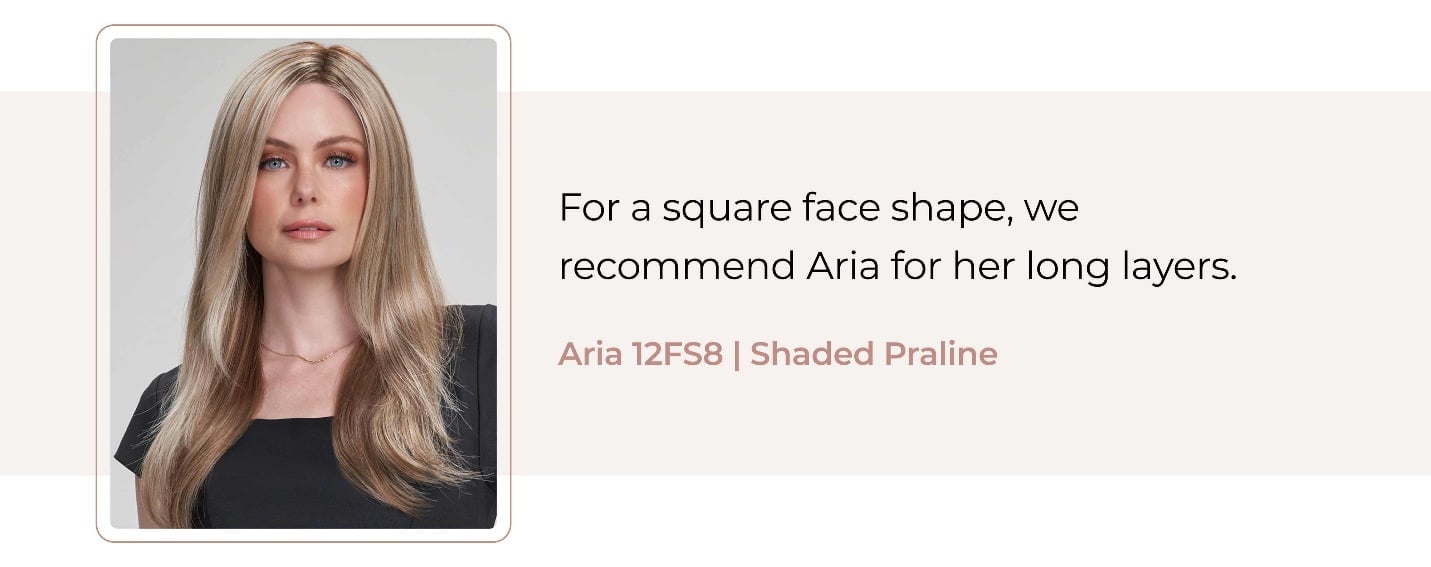
For a square face shape, we recommend Aria for her long layers.
Aria 12FS8 | Shaded Praline
4. Heart
Balance a wider forehead and narrow chin by adding volume around the jawline.
Chin-Length Bobs — add fullness around the jaw, balancing your face
Side Parts and Bangs — soft side-swept bangs reduce forehead width
Wavy or Curly Styles — add width to the lower part of your face
Avoid: Super short pixie cuts that can make the chin appear sharper.
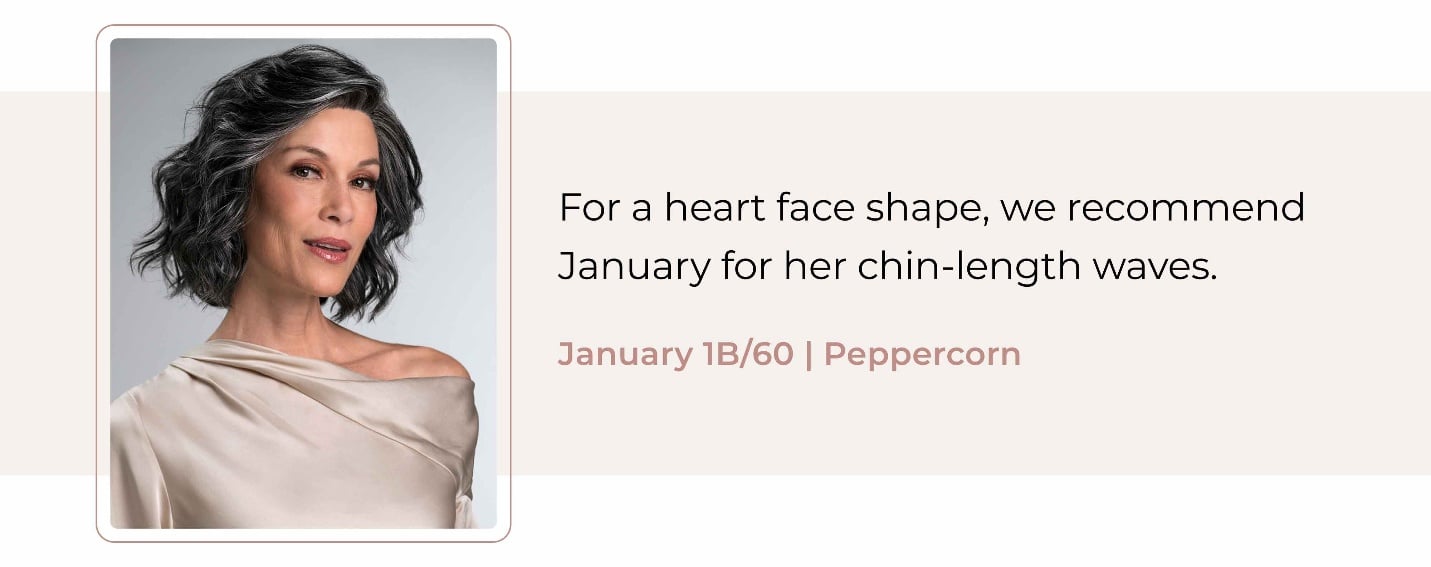
For a heart face shape, we recommend January for her chin-length waves.
January 1B/60 | Peppercorn
5. Long / Rectangular
Add width and volume to balance the length of your face.
Curls and Waves — add width and soften the face's length
Bangs — straight across or side-swept bangs shorten the perceived face length
Layered Cuts — add volume and reduce the appearance of length
Avoid: Long, straight styles without layers, which can further elongate the face.
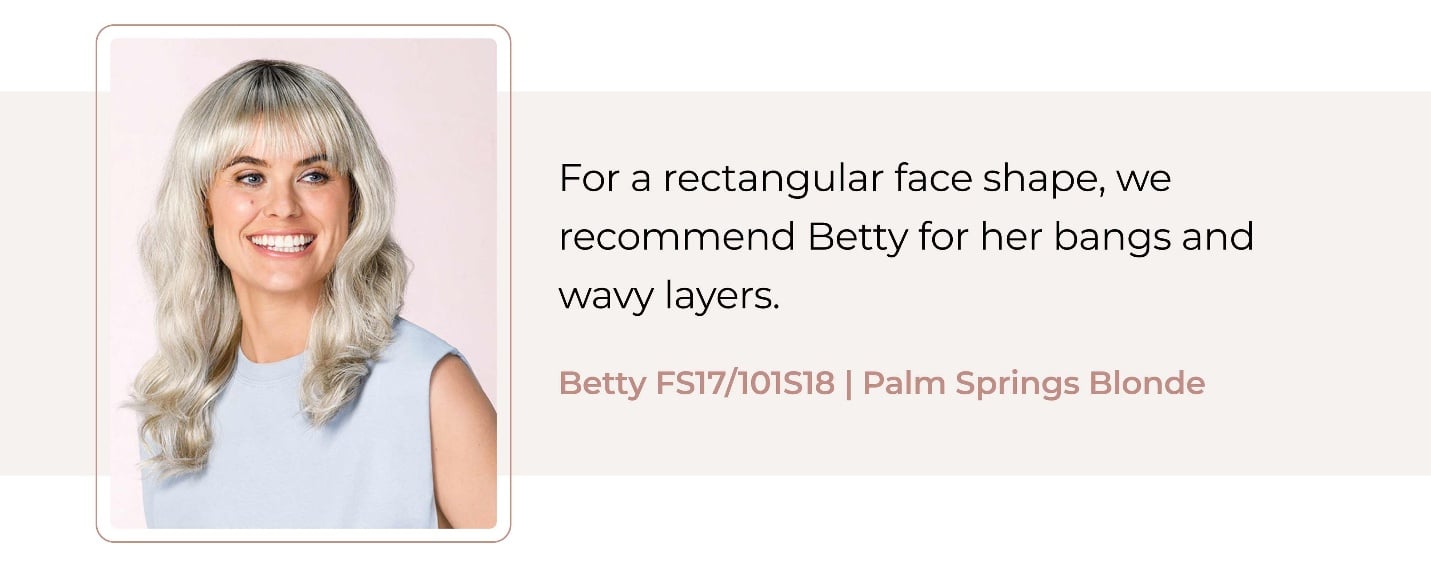
For a rectangular face shape, we recommend Betty for her bangs and wavy layers.
Betty FS17/101S18 | Palm Springs Blonde
6. Diamond
Soften the cheekbones and balance the narrow forehead and jawline.
Chin-Length Bobs — add width to the jawline
Layered Cuts — soften the sharpness of your cheekbones
Side Parts — add softness and reduce the width at the cheeks
Avoid: Styles with too much volume at the cheeks, and high ponytails that exaggerate the narrowness of the forehead and jawline.
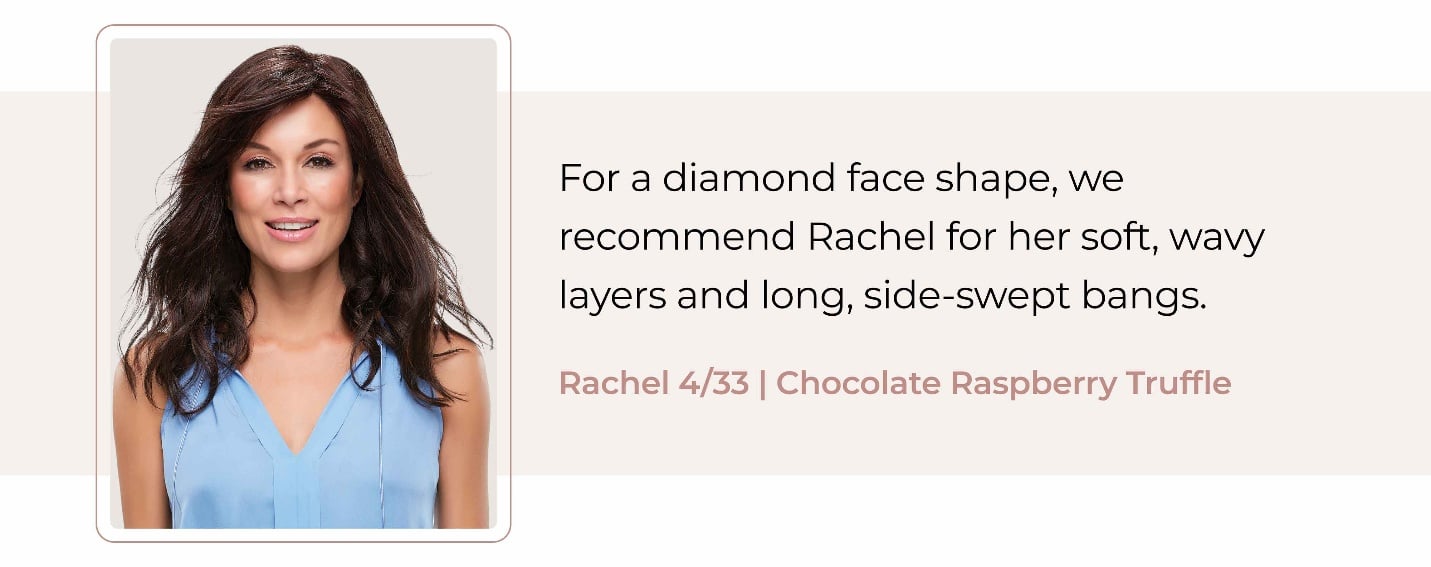
For a diamond face shape, we recommend Rachel for her soft, wavy layers and long, side-swept bangs.
Rachel 4/33 | Chocolate Raspberry Truffle
WigSalon Tip Don't get too caught up in face shape rules — they're a starting point, not a strict guide. Many of our customers fall in love with a style that "shouldn't" work for their face shape. Trust your eye. If you're not sure, email us at info@wigsalon.com — we've been doing this for over 20 years.
6. Understanding Wig Colors
Wig color codes can look like a foreign language at first. Here's how to read them.
Basic Numbers
Most brands use a number to indicate the base color. Lower numbers are darker, higher numbers are lighter — though this isn't perfectly consistent across all brands.
1 is black and as numbers get larger the browns get lighter with 12–13 being the lightest brown.
14 starts blondes up until 26.
27–33 are reds with 27 being the lightest and 33 being dark wine red.
From 34 to 61 are grays with 34 being darkest and 60 being white.
Common Color Code Prefixes & Suffixes
Code
Meaning
Example
R (RL)
Raquel Welch's color system — base color with natural variation built in
RL6/30 = Dark Brown (6) with Auburn (30) highlights
GL
Gabor's color system — rich, blended shades
GL14-22 = Sandy Blonde blend
GF
HairUWear's color system (used for Gabor, HairDo brands)
GF12-16SS = Light Brown (12) with Gold Blonde (16) soft shadow darker roots (SS)
SS
Shadow Shade — a rooted version with darker, natural-looking roots. 8SS and 8 are different colors — do not substitute.
SS14-88 = Dark Blonde (14) with Light white Blonde (88) highlights with shadow roots
RT
RT at the end = Rooted — darker at the roots, lighter toward ends
12/26RT4 = Light Brown (12) with Gold Blonde (26) rooted with 4 (darkest brown)
H / CH
Highlights / Chunky Highlights — lighter pieces woven through
12-26CH = Light Brown with Chunky Golden highlights
Not sure about a color? Almost every product page at WigSalon.com shows real color swatches. Click any swatch to see an example wig in that color. Still unsure? Email us at info@wigsalon.com — we can describe colors in plain English and show larger pictures to help you match to what you have now or adventure into new shades that may work better than "what you have."
7. Care & Maintenance
Synthetic Wigs
Wash every 6–8 wears, or sooner if there's product buildup or odor
Use cool water and wig-specific shampoo — regular shampoo can damage synthetic fibers
Gently swish; never scrub or wring
Rinse thoroughly, apply a small amount of wig conditioner, rinse again
Pat dry with a towel — never rub
Place on a wig stand and let air-dry completely before wearing or storing
Never use a hair dryer, flat iron, or curling iron on standard synthetic
Store on a wig stand or in a net bag — avoid crushing
This video can be very helpful for shampoo education:
Human Hair Wigs
Wash every 10–15 wears, or as needed
Use sulfate-free shampoo and a moisturizing conditioner
Detangle gently before washing — work from ends up to roots
Rinse thoroughly with cool or lukewarm water
Use heat protectant before any heat styling
Store on a wig stand away from sunlight
This video is very helpful for shampoo and conditioning education:
WigSalon Tip A wig stand is the single best investment after the wig itself. It keeps the shape, allows airflow, and helps prevent tangles. Most cost under $12.
8. First-Timer Tips
Start with synthetic. Lower investment, easier care, and you'll learn your preferences faster.
Order your natural hair color first. It's the easiest to wear confidently while you get used to the feel of a wig.
Wear it around the house first. Get comfortable before wearing out. Some people feel self-conscious for the first hour and fine after that.
The fit should be snug but not tight. You should be able to fit one finger under the edge. If it's sliding or lifting, use the interior Velcro adjusters.
Wig grips and caps help. A wig grip headband or thin wig cap underneath adds comfort and security, especially if you have little or no natural hair.
Trim and customize. Almost every wig looks better after a quick trim by a stylist who works with wigs. Even half an inch off the ends makes a difference.
It's normal to need two tries. Many customers find their true favorite on the second purchase. Don't be discouraged — email us at info@wigsalon.com and we'll help narrow it down.
Questions? We're here. WigSalon.com has been helping customers find their perfect wig since 1996. Email us at info@wigsalon.com anytime — we know our catalog inside and out, and we love helping people find something they feel great in.
Page last updated April 2026 · WigSalon.com
Sign up for Emails
Learn about new products and sales before they go live and other cant-miss information.